
Starling Control Program
Protecting Vineyards and Agriculture
European starlings are an invasive species that can significantly damage vineyards, orchards, livestock operations, and other agricultural enterprises
The BC Grapegrowers' Starling Control Program works with trained contractors, landowners, and community partners to reduce starling populations through targeted trapping, monitoring, and habitat-based management.
2026 Results at a Glance
The first half of 2026 demonstrated the continued value of coordinated starling control efforts across the Okanagan
January – June 2026 Highlights
• 2,984 starlings removed
• 286 hours of field trapping
• 226 hours of trap construction and maintenance
• 7,729 kilometres travelled to agricultural, rural, and landfill-based trapping locations.
Month
January
February
March
April
May
June
Total
Removed
51
835
1,257
217
235
848
2,984
-
The European starling ranks among North America’s 100 most invasive species. These birds are one of the most damaging forces facing agriculture today; they are also ecologically destructive, forcing native birds from their nests and destroying their eggs. The control program effectively reduces populations year-round, especially juvenile populations in summer.
Starlings are a non-native invasive species and are not protected by the BC Wildlife Act, and property owners are encouraged to prevent them from breeding successfully. Because wildlife laws don’t protect these birds, it is legal to remove their nests and destroy the eggs or the birds themselves.
-
Why we trap: the trapping program reduces populations of the worst culprits – the juveniles – which tend to cause more damage to fruits, berries and grapes. The trapping program effectively captures the feeding populations and substantially reduces the damage they cause to agriculture in the Okanagan Similkameen. Without ongoing trapping, starlings may return to their former destructive numbers.
Where we trap—Traps are traditionally located in feedlots, landfills, and hobby farms with a combination of poultry, horses, and other animals, as these are particularly good sites for capturing starlings, especially if vineyards, orchards, or market gardens are present.
They are not often placed in a vineyard or orchard because this can result in more crop loss for the property owner. This is because the trap and its noise will attract more starlings to the location. If the trap is in an orchard or vineyard, starlings will often ignore the trap and the bait as soon as it is less sweet and tasty than the fruit on the surrounding vines.
-
Local governments already fund over 50% of the program’s cost, so all agricultural producers must maintain these contributions. All growers must assume more responsibility. If the program can be maintained, or expanded, we all stand to benefit.
The Okanagan Similkameen starling control program is requesting donations of $10 per planted acre from all Okanagan Similkameen agricultural producers.
-
We have partnered with the South Okanagan Conservation Alliance and other organizations in this initiative. We encourage all landowners in rural and urban areas to identify, reduce, and block starling nesting sites. Everyone can participate and make a difference for starling populations. Kansas City reduced starling abundance by 60% in two years. The municipality adopted a policy to reduce nesting sites within the city through mandatory building repairs and design modifications.
All agricultural producers can reduce crop damage with an aggressive program to block and destroy nesting sites on their property and by encouraging their neighbours to do the same.
Starlings are adept at establishing sites in nooks and crannies in buildings – which can damage buildings, create fire hazards, clog gutters and drainpipes, etc. Identifying and blocking nest sites is effective in helping to control starlings, and is something everyone can participate in – we need your support and for you to encourage your neighbours to help as well.
SEAL UP HOLES EVERYWHERE! Starlings love to nest in crevices and holes, so it’s good practice to seal any holes in your buildings that are larger than one inch (2.5cm). Use wood, ¼” hardware cloth, aluminum, or other sturdy material, as light material such as bird netting or rags will not keep determined starlings out.
MAKE NEEDED REPAIRS. Replace any loose shingles or siding, close any open soffits, and repair broken windows.
AGRICULTURAL PRODUCERS can help reduce damage by keeping their farms clear of food (i.e. burying unwanted fruit rather than dumping it on the ground).
-
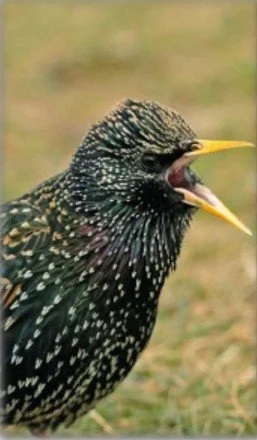
Starlings are a non-native species and are not related to our native blackbirds. They are iridescent black with speckles. Their beaks are dark in winter and yellow in summer.
Stocky black bird
Pale legs
Shimmering green and purple feathers in the spring
Long pointed bill – yellow in the nesting and breeding season; brown in the fall and winter
Males and females are similar with subtle differences
Juveniles are drab grey-brown all over
Starlings moult their feathers in the fall–new feather tips are whitish, giving the bird a speckled appearance that gradually dulls over winter
SIMILAR SPECIES Sometimes it’s easy to confuse these species with starlings:
Blackbirds–have slimmer bodies, longer tails, and shorter, thicker bills than starlings. No blackbirds have a pale yellow bill or pale legs.
Juvenile & Brown-Headed Cowbirds are coloured very similarly to a juvenile starling. The Cowbird has a longer tail, a slimmer body, and a much stouter and shorter bill.
How the Program Works
The Starling Control Program involves
• Trap construction and maintenance
• Site monitoring and data collection
• Trap relocation and baiting
• Wildlife observations and reporting
• Coordination with landowners and partners
Responsible Wildlife Management
The Starling Control Program is committed to responsible trapping practices and ongoing wildlife stewardship
Trappers monitor and document non-target species encountered during operations, including sparrows, juncos, blackbirds, finches, magpies, and other bird species. This information helps improve trapping practices and supports transparency in program delivery.
Focusing on High-Impact Locations
Landfill sites remain the most productive trapping locations
Operations at the Kelowna/Glenmore and Oliver-area landfill sites contributed significantly to the program’s overall success and continued to provide important opportunities for controlling large starling populations.
Looking Ahead
Efforts will continue to focus on
• High-density trapping locations
• Early-season preparation and maintenance
• Targeted trapping during juvenile emergence periods
• Improved reporting and monitoring
• Continued investment in trap infrastructure and equipment
These improvements will help maximize program effectiveness and continue reducing the impacts of invasive starlings on agriculture throughout the Okanagan.
Get Involved
Together, we can reduce the impact of invasive starlings and help protect Okanagan agriculture
Landowners and growers play an important role in the success of the Starling Control Program
If you are experiencing starling activity on your property or would like more information about participating, please contact us